

Building a Daily Language Practice Routine That Actually Sticks
Most people quit because they don't have a system. We've mapped out what works — and what doesn't.
Language exchanges, conversation clubs, and community groups where you can practice speaking with actual people. We've found the ones that are worth your time.

Learning a language from textbooks is one thing. Actually speaking with native speakers? That's completely different. You'll catch mistakes faster, pick up natural expressions, and build real confidence because someone's actually responding to you — not a robot repeating back the same phrases.
Dublin and Galway have thriving multilingual scenes. We're talking language exchanges, conversation clubs, and community groups where people meet specifically to practice. Most are free or nearly free. Some have been running for years. The people showing up genuinely want to help you improve because they're doing the same thing in their own languages.
Dublin's got the numbers. With over 20% of the population born outside Ireland, you'll find language groups scattered across the city — from Southside cafés to Northside community centers. The Meetup app alone has dozens of active language groups. Most meet weekly, some meet multiple times per week.
The big ones? Spanish groups fill rooms. French gets solid turnout. But here's the thing — the smaller language groups (Portuguese, Polish, Italian) often have better conversation quality because there's less waiting around. Plus you get more personal attention if you're new.
Temple Bar area has regular language meetups. Grafton Street cafés host informal groups. But don't sleep on the suburbs — Dún Laoghaire and Ranelagh have consistent weekly exchanges that actually get quieter and more focused than the city center crowds. That's where real progress happens.

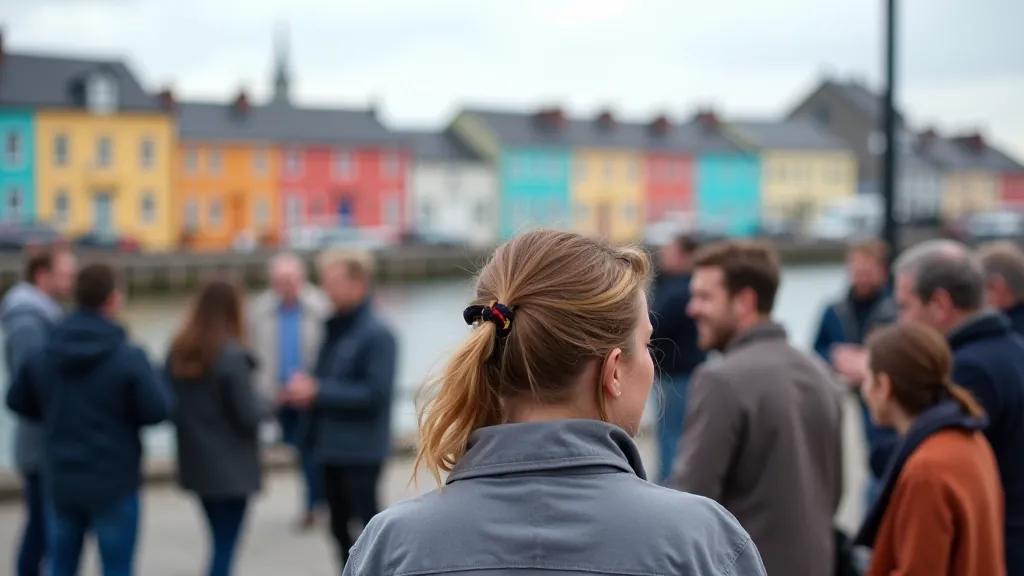
Galway's smaller, so the language community feels more personal. You'll actually remember people's names. Groups here tend to be more stable — same faces showing up regularly rather than constant turnover like you'd get in Dublin's larger meetups.
The Galway Cultural Institute runs regular language exchanges. Local university students get involved, which keeps things fresh. Conversations naturally drift into Irish language (you'll pick that up too), and there's genuine curiosity about each person's background. Not just practicing — actually getting to know people.
The waterfront's central to Galway's scene. Ó Máille's and other pubs near the Quays host informal language meetups. Summer brings more outdoor groups. Winter? That's when you find the committed ones who show up anyway because they're serious about improving.
This article is informational and educational in nature. Group details, meeting times, and availability change frequently. We recommend checking Meetup.com, local community center websites, and university notice boards for current schedules and contact information. Language community groups are run by volunteers and independent organizations — verify details directly before attending. This guide is based on information current as of May 2026.


Don't overthink this. Show up to a group, introduce yourself, and speak. You'll be nervous. Everyone is. But that's exactly why these groups exist — nobody's judging because everyone's in the same boat.
Groups of 5-8 people are ideal for beginners. Big groups (15+) get cliquey. Tiny groups (2-3) feel awkward. Aim for the middle ground.
Arrive 10 minutes before start time. The first 20 minutes usually has structured exercises. The real learning happens after — when people relax and just chat.
Let people know you want feedback. But don't stop mid-sentence for every error. Get the flow going, then ask about specific mistakes afterward.
You'll hear words and phrases you've never seen before. Write them down immediately. Review them the next day. That's how new vocabulary actually sticks.

Apps and textbooks teach you the structure. Language communities teach you how people actually talk. You'll learn slang you'd never find in a course. You'll understand why native speakers use certain phrases. You'll build connections with real people who share your interests.
Dublin and Galway have built something worth joining. It doesn't cost much. The commitment's minimal. But the payoff — actually being able to hold a conversation, understanding native speakers, feeling genuinely confident — that's something you can't get from any app. So find a group, show up, and speak. That's it. That's how it works.